
Blue Minds: Brian Caccioppoli
The ocean is an almost magnetic thing to people who are drawn to it.

Brian Caccioppoli 鈥�11 came to 911爆料 to study marine biology as an undergraduate, but fell in love with coastal geology. As a marine research specialist at 911爆料’s Graduate School of Oceanography, Caccioppoli studies climate change, erosion, and other factors affecting coastal geography. He works with other marine research specialists and lab techs mapping shorelines and seafloor depth, and surveying the marine life there. Plainly put, Caccioppoli鈥檚 work monitoring and documenting change provides answers to such questions as why and how beaches are altered by single events (like storms) and over time鈥攚hich, in certain cases, places Rhode Island in a better position to seek federal funding. 鈥淲hat I do is pragmatic science,鈥� Caccioppoli says.
Pragmatic science can be disheartening. For instance, beach replenishment鈥攁dding sand to an eroding shoreline to reduce storm damage and coastal flooding鈥攃an feel futile because, says Caccioppoli, 鈥淚t鈥檚 not unheard of for a beach to lose a third of its replenished sand within just two years.鈥� But Caccioppoli presses on. His stake in this work extends beyond the bounds of professionalism. 鈥淚 want to know what鈥檚 going on and how it will affect what I love to do,鈥� he says. 鈥淚t鈥檚 all intertwined for me.鈥�

What Caccioppoli loves to do is surf. He鈥檚 been at it for 14 years. Growing up 鈥╫n Long Island, he and his family were at the beach three to five days a week in the summer. Surfing was an instant addiction. 鈥淭he first wave I caught, I knew I was 鈥╥n trouble. I knew it was going to change decisions I made on a daily basis,鈥� he 鈥╯ays. 鈥淭he first time you get your feet on the board and catch a wave, it feels like you鈥檙e flying.
‘Your burdens are gone’
鈥淲hen you go out into the water, your brain clears. You stop focusing on anything other than the pure experience of being on the ocean,鈥� Caccioppoli continues. 鈥淵our burdens are gone. You come out and the tasks you have to do don鈥檛 seem so huge. It鈥檚 such a mood elevator, such a stress reliever.鈥�
Yet surfing sometimes grants Caccioppoli an up-close-and-personal view of the tension that is climate change. One way climate change manifests itself, for instance, is in more frequent and powerful storms. Storms produce better surf. “But climate change could also result in the disappearance of some of our current surf breaks,” says Caccioppoli. “Quite a few local surf spots break best at lower tides鈥擬atunuck, for example. We know sea level has risen over the past century here in Rhode Island. That trend will result in higher sea levels, which will inevitably result in changing surf breaks, possibly rendering some nonviable.”
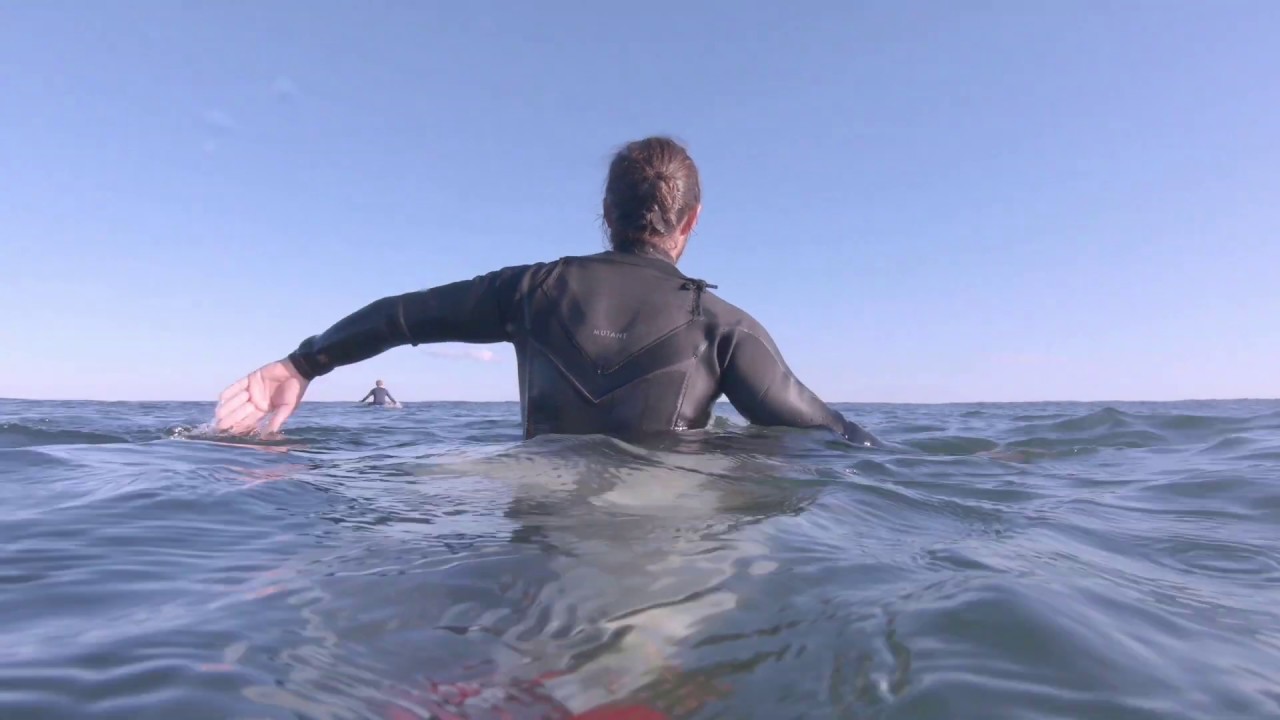
In talking of his fellow New England surfers, Caccioppoli characterizes them as 鈥渇ully committed鈥� to the sport. In observing him talking about his research and his chosen sport, the phrase fits him, too.
Caccioppoli smiles at the suggestion.
“The ocean is an almost magnetic thing to people who are drawn to it,” he says.